The Imperial Ledger and the Murky Danube: A Chronicle of Decrees, Tariffs, and Forgotten Charters
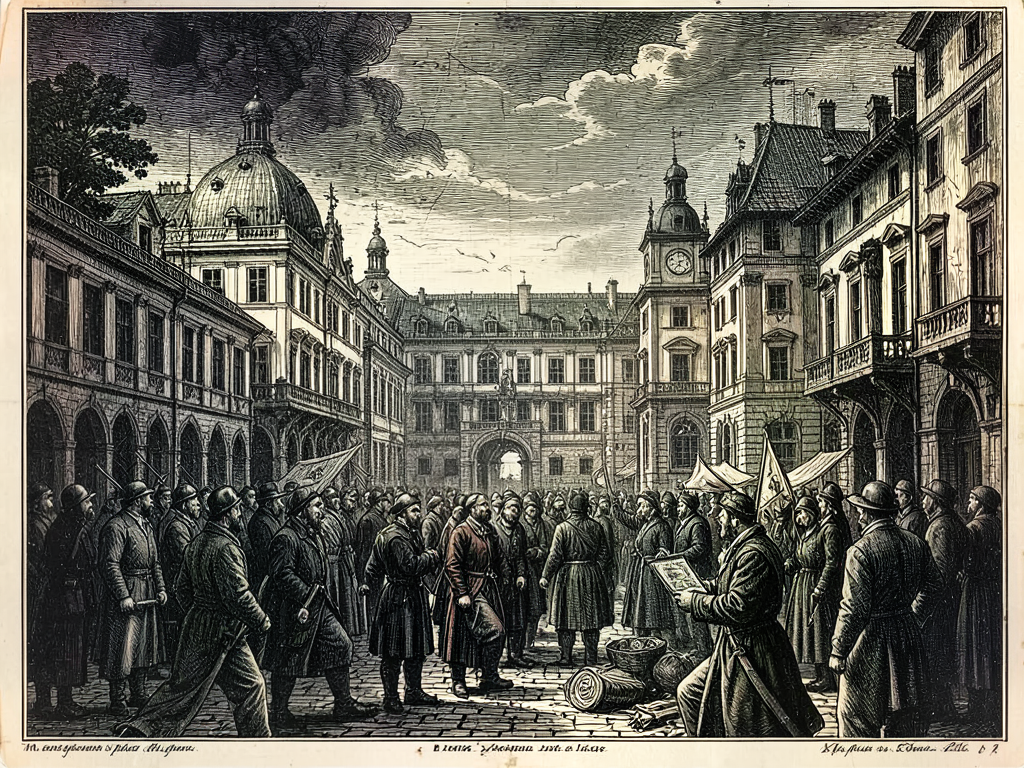
The latest folios of the Imperial Court and Danube Commercial Gazettes, dated the 31st day of August, have at last traversed the mountain passes to our gloomy scriptorium. Within their crackling leaves, we find the usual litany of Habsburg bureaucracy: chancery decrees concerning the salt monopoly in Galicia, a tedious enumeration of tariffs upon Bohemian glass and Hungarian hides, and the meticulous schedule of Danubian river packets. Yet, for the diligent antiquarian, these dry registers possess a spectral fascination. They are the sinews of empire, the quiet, relentless pulse of a state that measures its power in guilders and grain, not in the faded glories of medieval charters.
I confess, my eye was drawn less to the commercial columns than to a particular decree concerning the authentication of municipal charters within the newly organized Danubian principalities. It is a matter of the gravest import, for it speaks of a commission tasked with verifying the provenance of certain foundational documents. This, I fear, strikes at the very heart of a secret I have long harboured. Hidden within a recess of our own citadel's ossuary, I possess a parchment that, if genuine, would prove our beloved founding charter to be a clever forgery of the fourteenth century. The Imperial chancery's sudden interest in such matters is a chill wind from Vienna.
The river packets, too, carry more than bales of wool and casks of wine. They are the arteries of intrigue, bearing spies, couriers, and—if my informants speak true—agents of the Crown seeking to catalogue and perhaps seize ancient deeds and testaments. The Gazette lists the departure of the 'Sophia' from Pest to Galatz, her cargo manifest a mere formality. What else might she carry in her captain's strongbox? A letter of marque? A warrant for the arrest of a troublesome archivist who knows too much? The tariffs, meanwhile, seem designed to bleed the borderland provinces dry, a slow economic strangulation that weakens the old noble houses who might otherwise defy Vienna.
Thus, as the candle gutters in my crypt and the rats scurry beneath the flagstones, I pen this chronicle. The Imperial Court may issue its decrees and the Danube may carry its cargo, but the truth of our citadel's past remains buried, awaiting a more auspicious moment for its revelation. For now, I must remain the keeper of inconvenient truths, a ghost in the scriptorium, watching the slow dance of ink and power unfold from afar.