The Imperial Ledger: A Survey of Gazettes, Edicts, and Trade Bulletins Across the Austrian Crownlands
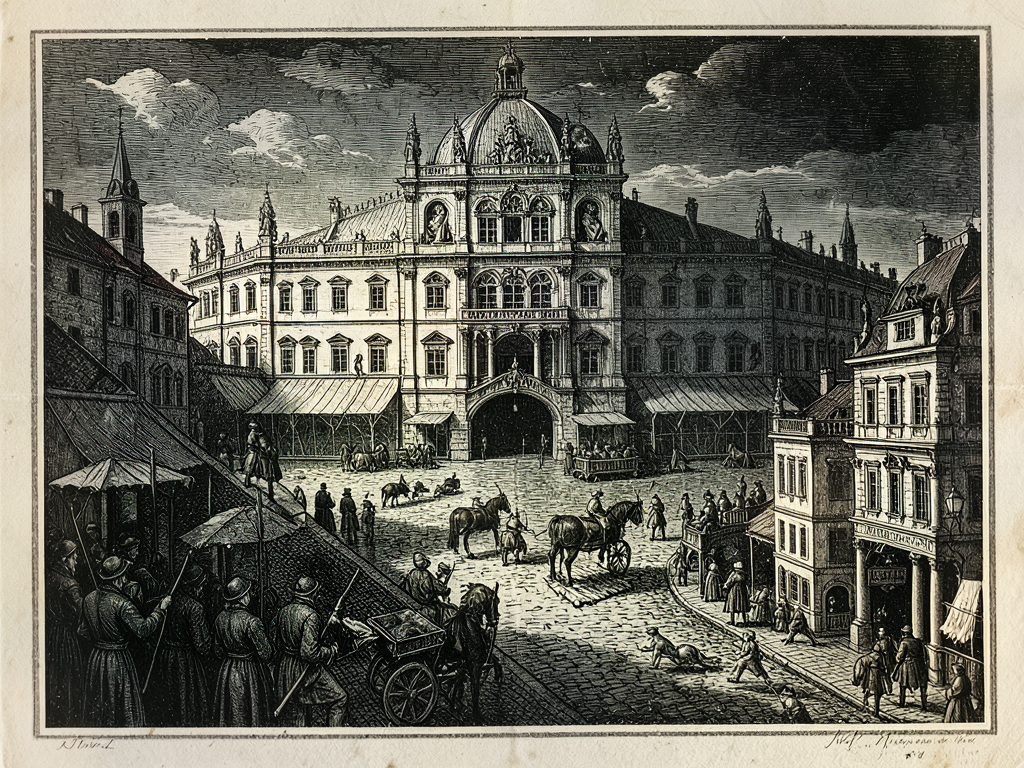
The morning post has arrived, and with it, a veritable flood of gazettes, bulletins, and chancery edicts, each bearing the weight of imperial commerce. From the presses of Vienna to the provincial print shops of the Crownlands, the day's journals present a mosaic of official decrees, trade figures, and market intelligence. The diligent auditor or merchant who peruses these sheets will find both reassurance and caution, for the currents of trade shift as swiftly as the winds over the Carpathians.
Foremost among the day's offerings are the official publications of the Imperial and Royal Chancery, which detail adjustments to tariffs on grain and timber—staples that bind our provinces to the Viennese markets. The edicts, printed with the customary black-letter severity, remind us that the state's hand rests heavy upon the scales of commerce. Yet, within the same pages, one finds notices of new toll roads and bridge repairs, promising swifter passage for the wagons that creak under their loads of Transylvanian silver and Wallachian maize.
In Pest, the commercial bulletins report a steady, if unspectacular, demand for Hungarian wheat, while the brokers of the Exchange Arcade note a slight uptick in the price of copper, driven by enquiries from the foundries of Bohemia. The Viennese Börse, ever the barometer of imperial confidence, shows cautious stability in government bonds. Meanwhile, the provincial sheets, printed on coarser paper but with no less ambition, catalogue the local fairs and the arrival of itinerant merchants, their packs heavy with wares from the Levant and the German lands.
For the reader of the Transylvania Gazette, these collected gazettes serve a dual purpose: they are both a mirror of the Empire's economic health and a practical guide for the coming weeks. Let the prudent study them, for in the intricate dance of tariffs and prices, fortunes are made and unmade. As the autumn rains begin to swell the rivers, so too do the currents of commerce rise, and he who reads the signs may yet navigate the rapids to prosperity.