Imperial Chancery Echoes: Tariffs, Packets, and the Danube's Silent Commerce
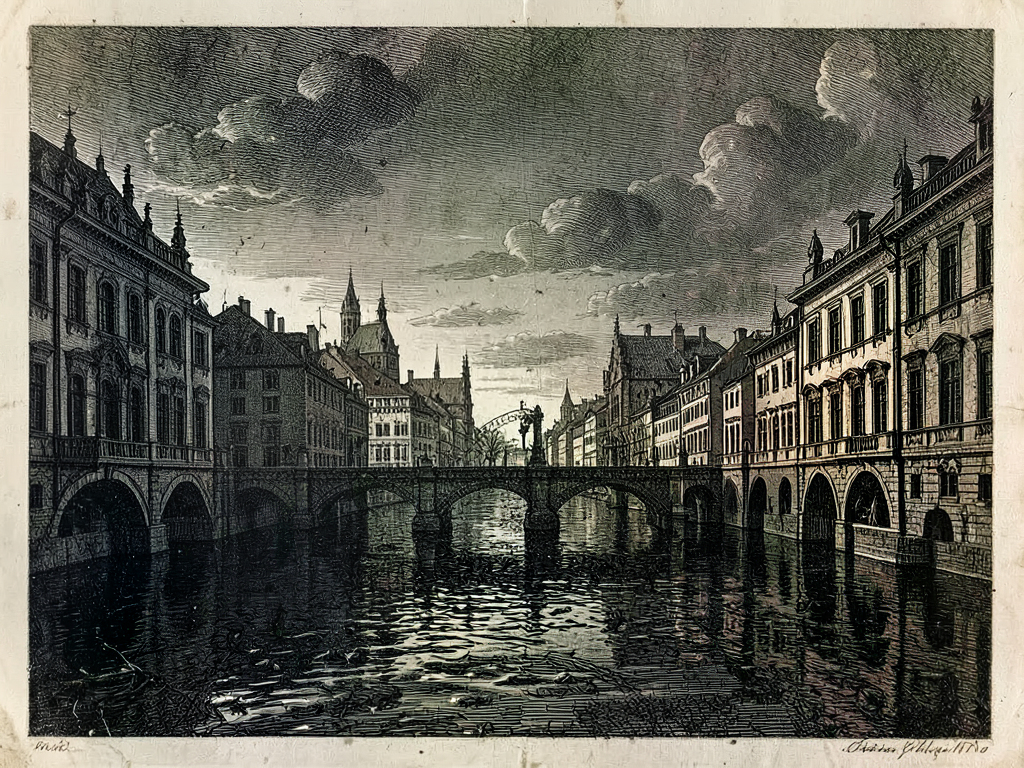
The imperial city on the Danube, that great carrefour of nations, has this week yielded forth from its chanceries a fresh sheaf of proclamations, faithfully recorded in the Wiener Zeitung of the 3rd of September. The edicts, bearing the florid signatures of ministerial councillors, touch upon the regulation of riverine tolls, the warehousing of grain within the Banat, and sundry amendments to the quarantine protocols that guard the frontier against the Levantine fevers. To the casual reader these entries may appear as arid bureaucratic minutiae, yet to the chronicler of the age they are the very sinews binding the vast Austrian Crownlands into a coherent commercial polity.
Of particular note in this week's folio is the ledger of packet movements upon the Danube, that silver artery of empire. The steamships 'Szigetvár' and 'Maria Anna' are reported to have departed from Vienna on their appointed schedules, their hulls laden with bales of Bohemian linen, chests of Transylvanian salt, and crates of Moravian glass destined for the bazaars of Pesth and the Black Sea ports. The gazette, with its usual precision, lists the vessels' tonnage, the names of their masters, and the draught of water, as though the very river were a thoroughfare to be surveyed by the imperial eye. Such meticulous record-keeping speaks not merely of commerce, but of a state that sees in every barge a filament of its own dominion.
Yet, turn the page, and one finds the sterner face of the Habsburg administration: the tariff schedules, revised with the autumnal equinox. Duties upon Ottoman tobacco, upon Wallachian hides, upon the crimson madder of the Levant, are all set forth in columns of kreuzers and gulden. The chancery, ever mindful of the mercantilist balance, has seen fit to raise the impost on raw silk whilst lowering that on finished cloth, a subtle encouragement to the looms of Vienna and Brünn. These figures, dry as dust to the uninitiated, whisper of a grand design to channel the flows of trade, to nurture domestic manufacture, and to assert the primacy of the imperial capital over the provincial entrepôts.
In this quiet catalogue of decrees and schedules, one discerns the true pulse of the age—not the clamour of revolution, but the steady, unrelenting cadence of administrative order. The Wiener Zeitung, in its unassuming columns, offers to the philosopher of history a singular artefact: the very machinery of state, rendered in black letter and tabulated rows. Here, in the interplay of tariff and tariff, of packet and proclamation, is the Habsburg monarchy's own confession of its temporal power, a power that flows not from the sword alone, but from the pen and the ledger.