The Treaty of Tangier: Morocco Bows to the Gallic Eagle—A Chronicle of the Franco-Moroccan War and Its Aftermath
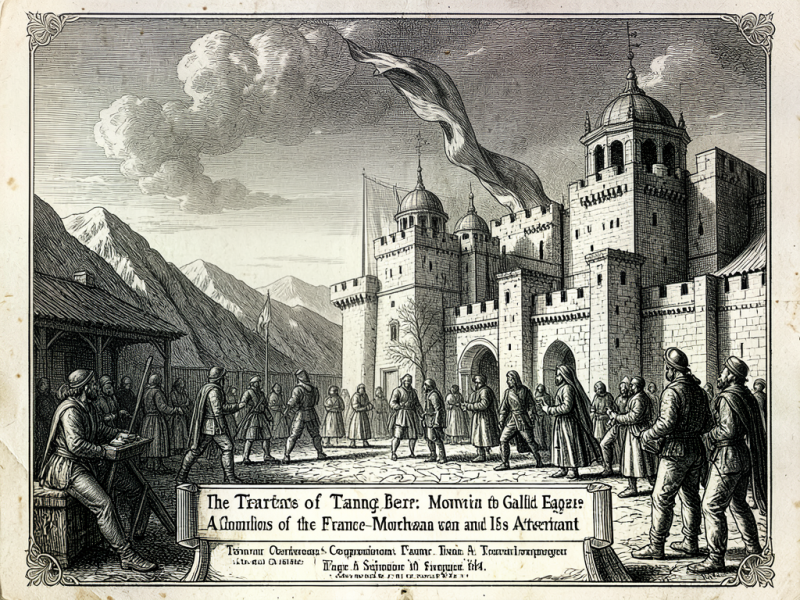
From our Overseas Correspondent, Tangier, 10th September 1841. A dispatch has reached this office confirming the conclusion of the Treaty of Tangier, a document that brings to a close the sanguinary contest between the Kingdom of Morocco and the French forces in Algeria. The treaty, signed under the shadow of the ancient kasbah, compels the Sultan to recognize the French possessions in Algeria as legitimate and perpetual. The war, which began with border incursions and escalated into full-scale bombardment of Tangier and Mogador, has ended in a decisive victory for the Gallic eagle. The terms are severe: Morocco must cede territory, pay an indemnity, and abandon all claims to the Algerian interior. Our correspondent, who witnessed the French fleet's thunderous cannonade, describes the scene as one of 'sublime terror,' the sea black with ships and the air thick with smoke and the cries of the wounded.
The treaty's implications stretch far beyond the Barbary Coast, for it signals a new era of European ascendancy in North Africa. The French, having secured their Algerian conquest, now turn their gaze toward the fertile plains and mountain passes of the interior. Yet, as I pen these lines from the relative safety of the Scarlet Pass Crossroads, I am reminded of the perilous nature of such frontiers. The wolves that haunt the Borgo Pass are not merely beasts of flesh and bone; they are the embodiment of the wild, untamed lands that resist the march of empires. The treaty may be signed, but the true struggle for these territories has only just begun. Let travellers bound for the overseas capitals take heed: the roads are fraught with danger, and the hospitality of the local potentates is as shifting as the desert sands.
Meanwhile, in the continental capitals, the treaty is hailed as a triumph of French diplomacy and arms. In Paris, the news was received with Te Deums and the firing of cannon, while in London, the foreign office regards the development with a wary eye. The balance of power in the Mediterranean is altered, and the other great powers must now reckon with a France emboldened by success. For the merchants and travellers who ply the routes between Tangier, Oran, and Algiers, the treaty promises a measure of security, though the inland roads remain subject to the caprice of tribal chieftains and the ever-present threat of banditry. The Gazette will continue to report on the safety of these passages, for the welfare of our readers is paramount.
As the autumn mists descend upon the Carpathian passes, I am reminded that the world is knit together by such treaties and conflicts, and that the fate of a Moroccan sultan is not so distant from the concerns of a Transylvanian crossroads. The wolves howl in the Borgo Pass, and the French tricolour flies over the kasbah of Tangier. Both are omens of a changing world, where the old certainties are devoured by the new. Let the reader take comfort in the chronicle of events, for in these troubled times, knowledge is the surest guide.