THE IMPERIAL LEDGER: VIENNA, PEST, AND THE CROWNLANDS TREMBLE AS SILVER AND GRAIN CONVULSE THE AUTUMNAL EXCHANGES
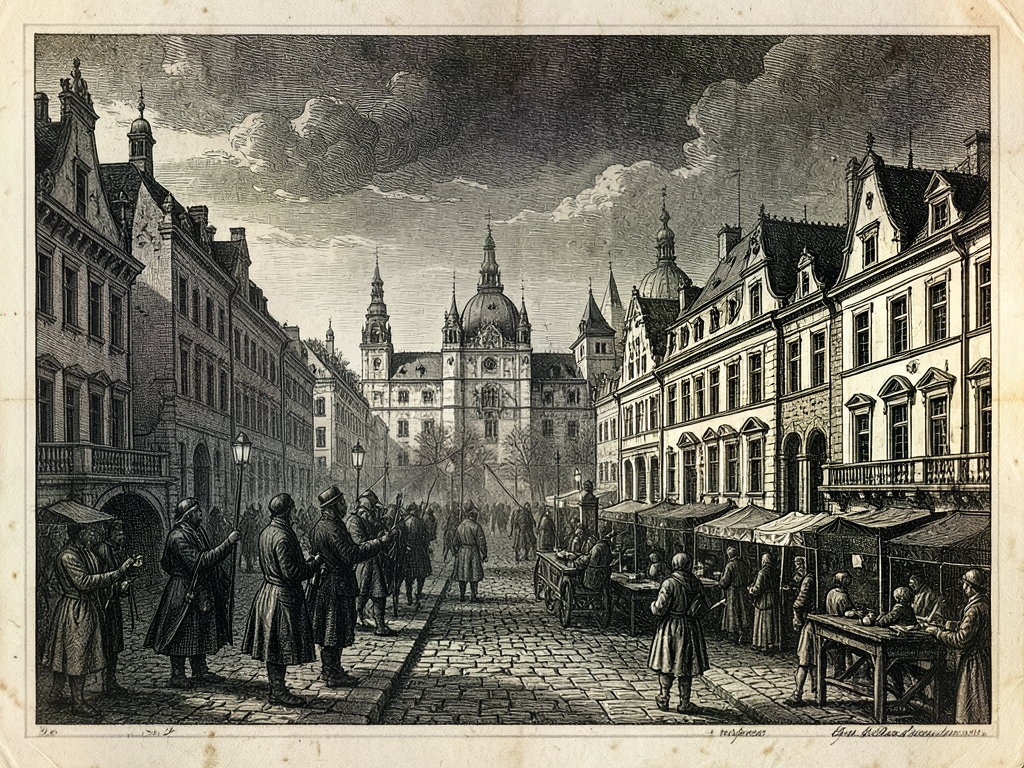
From the lofty arcades of the Vienna Bourse to the muddy quays of the Danube at Pest, the commercial gazettes of this 23rd of September, 1841, present a canvas of anxious fluctuation. The official chancery edicts, arriving by the morning post, confirm a subtle but pervasive tremor in the imperial economy. In the Crownlands, the copper smelters of the Upper Hungarian hills report a sluggish demand from the armament guilds, causing a fractional but unnerving decline in the price of the red metal. Conversely, the grain merchants of the Banat, their ledgers heavy with the promise of a late harvest, have driven the price of wheat down by two kreuzers per metzen, a boon for the city bakeries but a source of quiet despair for the rural estates.
It is the silver thalers, however, that command the most feverish attention. In the coffee-houses of the Graben, where merchants gather to whisper over steaming cups, the talk is of nothing but the shifting parity between the Viennese convention coin and the paper notes of the Pest savings banks. A curious phenomenon has been observed: as the provincial exchanges grow jittery, the demand for hard silver in Vienna intensifies, drawing the bright metal from the deepest vaults of Transylvania. I confess, in the privacy of my own ledger-room, that I have found it necessary to polish a dozen of these very thalers until my fingers ache, a compulsion that soothes the dread which rises whenever the market shudders. The timber trade from the Carpathian slopes remains steady, though the rafters on the Maros complain of low water, and the price of oak staves for the imperial cooperages has advanced by a half-kreuzer.
In Pest, the commercial bulletin speaks of a brisk traffic in wool and hides, yet the money-changers report a scarcity of small coin, forcing the innkeepers to issue private tokens of brass and tin. The official edict from the Chancery, published in the Wiener Zeitung, warns against the circulation of such debased tokens, threatening fines upon those who refuse the imperial currency. Yet the warning rings hollow where the silver is hoarded and the copper is scarce. The grain factors of the Theiss valley, having withheld their stores in expectation of higher prices, now find themselves compelled to sell at a loss, for the autumn rains have threatened the quality of the crop. Thus does the invisible hand of Providence, or perhaps of speculation, chastise the greedy and reward the cautious.
As the sun sets over the Carpathian borderlands, I close my ledgers and place my polished thalers back into their velvet purse. The exchanges of Vienna, Pest, and the Crownlands are not a machine of iron, but a living creature of sinew and fear. Tomorrow, the couriers will bring new prices, new panics, and new consolations. Until then, the Gazette shall record, with stoic precision, the rise and fall of every copper, timber, and grain, that the merchant and the magistrate alike may know the true temper of the empire's commerce.