The Imperial Ledger: A Day of Reckoning Across the Crownlands
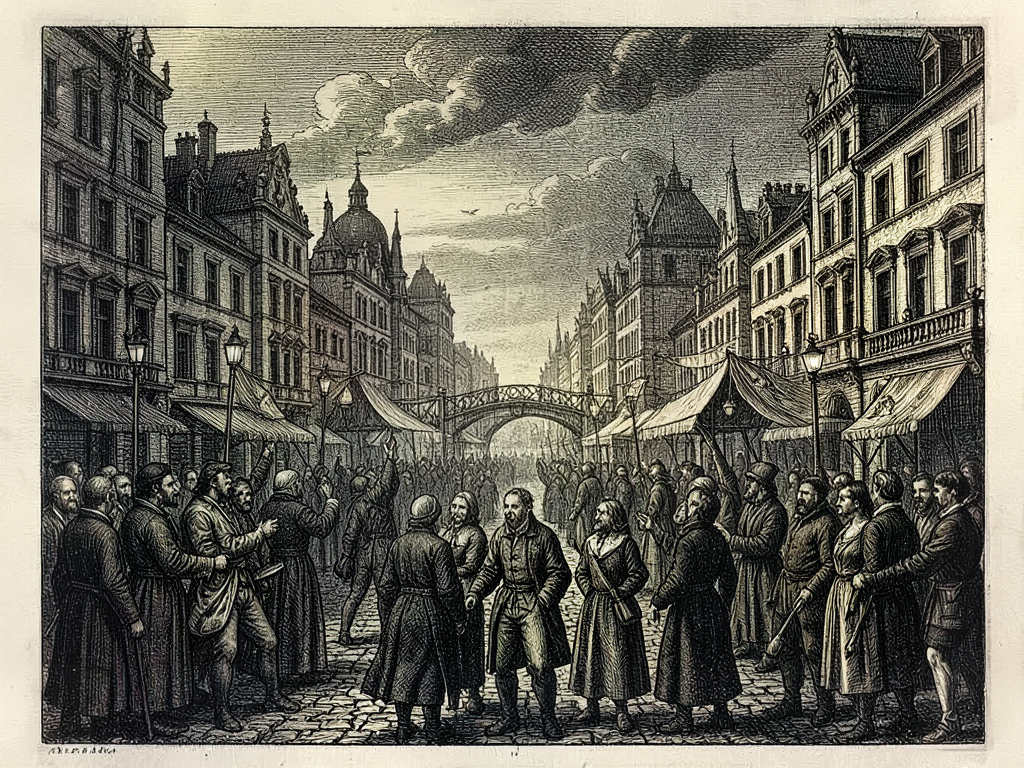
VIENNA, 29th September 1841. — The chancery edicts published this morn in the Wiener Zeitung betray a cautious hand upon the imperial purse. The silver thalers, those cold, gleaming sentinels of our commercial faith, have been subject to a most unnatural agitation. I have it from the Exchange Arcade that certain brokers of the Lower Ward have been seen polishing their coin with an almost devotional fervour, as though the friction of their thumbs might arrest the declining premium on Austrian specie against the Prussian standard. The official bulletin from the Hofkammer notes a withdrawal of some forty thousand florins in silver from the Vienna mint, a manoeuvre intended, no doubt, to steady the nerves of a market grown febrile with rumour.
PEST, 29th September 1841. — The grain bulletins from the Hungarian plain paint a less anxious picture, though the figures are not without their shadows. Wheat arrivals at the Pest wharves have risen by a fifth since the Feast of St. Michael, and the price per metze has fallen to a level not seen since the spring floods. Yet the timber trade along the Danube tells a different tale: rafts from the Carpathian slopes are delayed by low water, and the price of oak staves for the imperial cooperages has advanced by three kreutzers per fathom. The copper smelters of Upper Hungary report steady demand from the Vienna foundries, though the ore assays from the Banská Štiavnica district show a faint decline in yield.
TRANSYLVANIA, 29th September 1841. — From our own Exchange Arcade in the Upper Ward, the morning brings a curious stillness. The Saxon merchants of Hermannstadt have forwarded a memorandum to the Gubernium concerning the proposed tariff on Wallachian wool, and the Greek traders of Kronstadt are said to be hoarding silver against an uncertain winter. I confess that I have spent the better part of this day in the polishing of a dozen Maria Theresa thalers, a habit that soothes the dread which has plagued me since childhood—a dread that the coin may one day betray the hand that trusts it. The ledgers of the Gazette show no panic, but the ink runs thin where the figures for silver are written.
VIENNA, 29th September 1841. — The evening gazettes confirm that the imperial treasury has authorised a further issue of bank notes to the value of two hundred thousand gulden, to be secured upon the salt monopoly. The Bourse closed with consols firm at 87 1/4, but the discount on Hungarian paper remains at a stubborn five per cent. Let the reader take note: the empire's commerce moves not upon the grand gestures of state, but upon the small, cold weight of silver in a merchant's palm.