THE IMPERIAL LEDGER: A Day of Reckoning Across the Austrian Crownlands
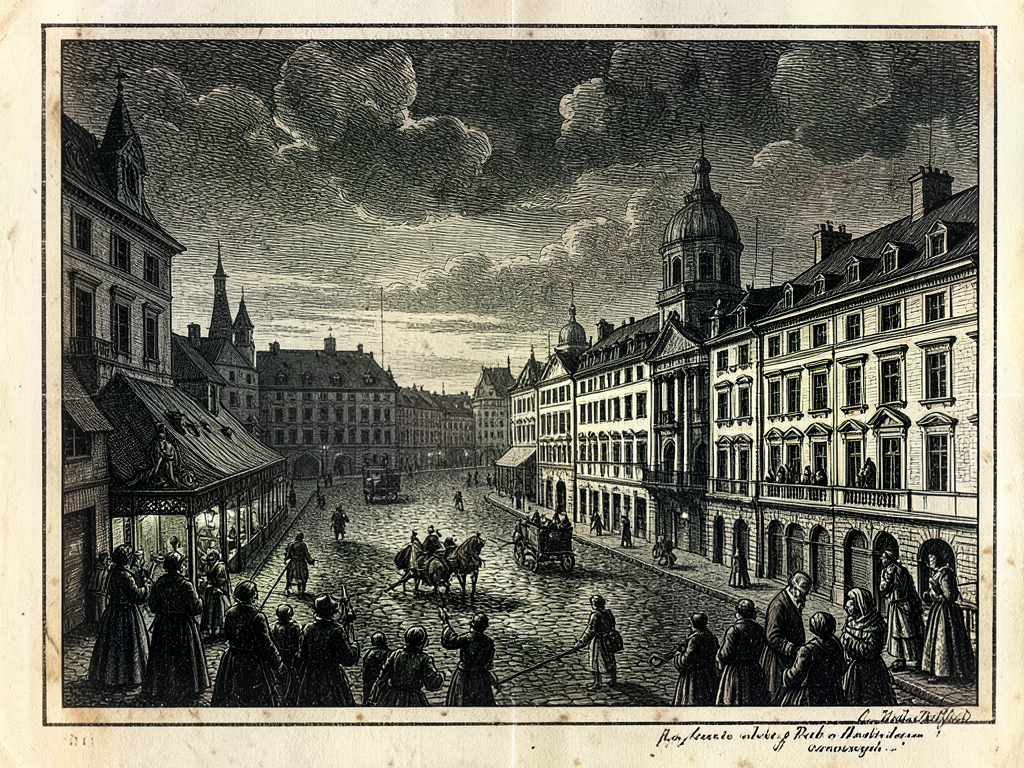
VIENNA, 7th October 1841. — The chancery edicts issued this morn from the Hofburg cast a long shadow over the bourse, where the price of silver thalers has climbed a further two kreuzer against the paper florin, a sure sign that the public purse clenches tight against unseen anxieties. Your correspondent observed the money-changers of the Graben polishing their coin with a nervous fervour, their loupes catching the pale autumnal light as they weighed each piece against the day's official rate. The imperial bulletin confirms a modest but steady demand for copper ingots from the mines of Upper Hungary, though the smelters of Banská Štiavnica report a dwindling yield in their deeper shafts, a matter that will not escape the notice of the Vienna Arsenal.
In Pest, the grain factors along the Danube quay have begun to murmur of a late harvest in the Banat, where early frosts have nipped the maize before the sickle could claim it. The trade gazettes of that city record a fall of four kreuzer per metzen of wheat, yet the millers of Buda hold their flour at last week's price, citing the cost of transport and the uncertain state of the river. The timber rafts from the Carpathian slopes, meanwhile, arrive in good order, their spruce and fir logs fetching a fair price from the naval contractors at Fiume, though the merchants of Transylvania complain that the tolls on the mountain passes have risen again, a burden that must be passed to the consumer.
Returning to Vienna, the evening bulletins from the Lombardo-Venetian provinces speak of a quiet silk market in Milan, the cocoons of the autumn brood meeting a steady demand from the weavers of Lyon and Zurich. Yet the true barometer of the Empire's health lies in the exchange arcade, where the discount on long-dated treasury notes has widened by a quarter point, and the brokers, with their ledgers open and their quills poised, regard one another with the guarded suspicion of men who have seen too many promises broken. The price of salt from Wieliczka remains fixed by imperial decree, a rare constant in a sea of fluctuation.
Thus, the commercial chronicle of this seventh day of October stands as a testament to the delicate machinery of credit and commodity that binds the Crownlands together. From the silver thalers of Vienna to the grain barges of Pest, the Empire's economy breathes with a slow, deliberate rhythm, ever watchful of the frost, the flood, and the fickle hand of foreign demand. Your correspondent shall continue to polish the facts, as he polishes his own silver, until the next dispatch.