From the Imperial Chancery: Decrees, Packets, and Tariffs on the Danubian Tide
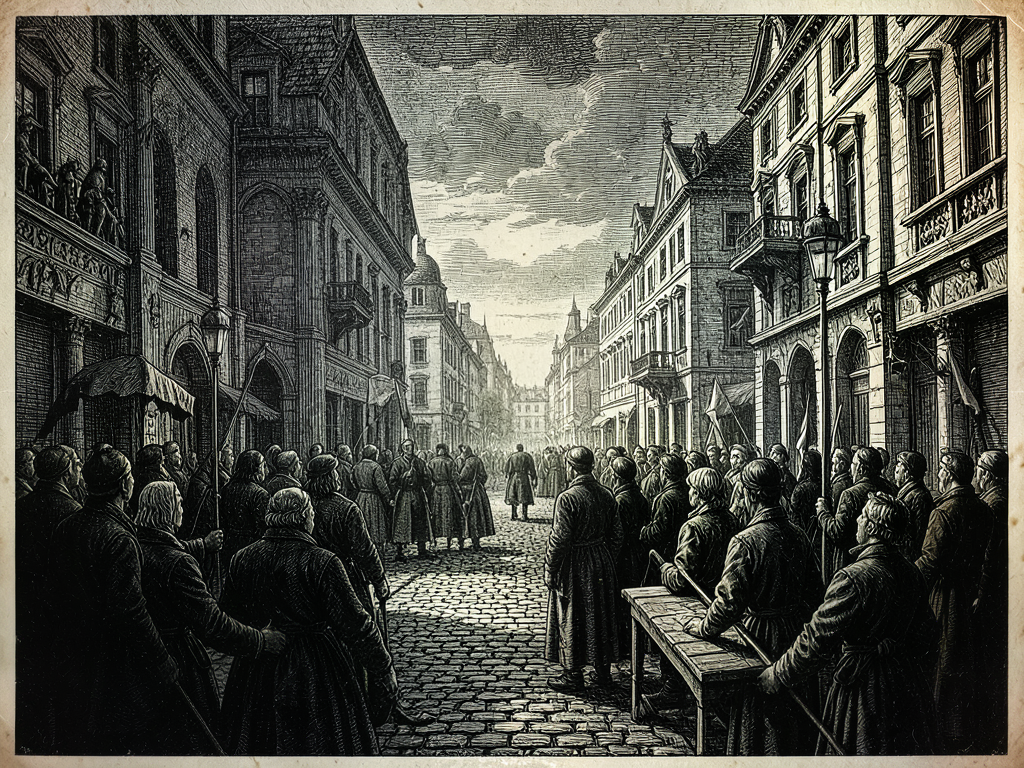
VIENNA, 9th October 1841. — The Imperial Court and Danube Commercial Gazettes, issued this very morn from the Hofburg chancery, lay before the reading public a sobering yet vital digest of the empire's commercial and administrative pulse. Foremost among the decrees is a revision of the salt monopoly tariffs for the Galician and Transylvanian districts, effective the first of November next. The chancery, in its inscrutable wisdom, has seen fit to raise the duty upon rock-salt transported by river barge, a measure that shall doubtless stir murmurs in the merchant quarters of Pest and Pressburg. One observes, with no small interest, that the tariff schedules are appended in a hand as precise as it is unforgiving.
Of equal note are the Danubian packet movements, recorded with the meticulousness of a monastic chronicler. The steamer Franz I, having departed Regensburg on the third instant, is reported to have passed Linz on the fifth, bearing a cargo of Moravian wool and Silesian linen, and is expected at Vienna by the eighth. The Erzherzog Johann, meanwhile, lies weather-bound at Dürnstein, her paddle-wheels stilled by the equinoctial gales. Such intelligence, though dry to the uninitiated, is the very lifeblood of the riverine trade, and the Gazette's correspondents at the custom-houses are to be commended for their diligence.
Yet it is the commercial tariffs from the Crownlands that command the closest scrutiny. The new schedule for the Trieste and Fiume ports reveals a subtle but unmistakable shift in the empire's maritime policy, favouring the Dalmatian carrying trade over the Venetian. Whether this presages a broader reorientation of Habsburg commerce toward the East, or is merely the caprice of a chancery clerk, remains to be seen. The Archivist notes, with a certain grim satisfaction, that even the most tedious of imperial decrees may conceal a rivet in the machinery of empire — and that the dust of the chancery is, in its own way, as revealing as the dust of the crypt.