From the Imperial Chancery: Decrees, Packets, and Tariffs on the Danube — A Chronicle of Vienna's Commercial Arteries
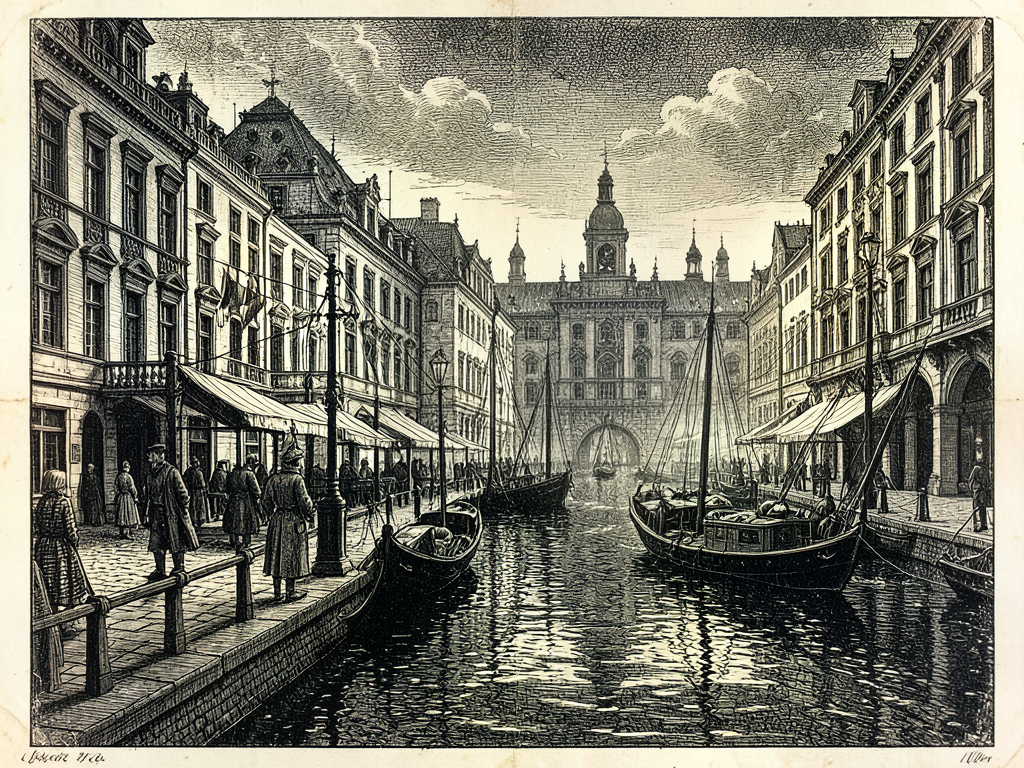
VIENNA, 16th September 1841. — The morning fog yet clings to the spires of St. Stephen's when the post-wagons rattle into the Hofburg courtyard, bearing the sealed portfolios of the Imperial Chancery. Within those wax-stamped packets lie the decrees that govern the far-flung Crownlands, and it is our solemn duty to transcribe them for the edification of our readers in the Carpathian borderlands. The Wiener Zeitung of this day records a revision of the Danubian tariff schedule, effective the first of October next, whereby the duties upon salt, iron ore, and woolen stuffs shall be adjusted at the customs houses of Pest, Pressburg, and Orsova. Such measures, though couched in the dry language of the chancery, carry the weight of a thousand barges and the livelihood of countless river folk.
Of equal note is the packet intelligence from the Danube Steam Navigation Company. The 'Ferdinand I.' departed Vienna on the fourteenth, carrying dispatches for Semlin and Belgrade, while the 'Arpad' was delayed at Gran by low water and a broken paddle-wheel. The Company reports a steady increase in passenger traffic—some four thousand souls this quarter—a sure sign that the peace of our borders invites commerce rather than cannonades. Yet the river, ever capricious, demands its toll: two barges of Transylvanian timber were lost near Drenkova, and the insurance brokers of the Graben speak of rising premiums.
Let it be remembered that these gazettes are not mere ledgers of coin and cargo. They are the sinews of an Empire that stretches from the Alps to the Carpathians, and every decree inked in Vienna echoes in the market-squares of Cluj and Kronstadt. The Chief Archivist notes with satisfaction that the chancery has seen fit to order a survey of all medieval toll-rolls and river-charters, a measure long urged by this department. For in the preservation of such parchments lies the true wealth of nations—not in tariffs alone, but in the memory of lawful custom.
Thus we commend these pages to the careful reader. Let him ponder the packet schedules and the tariff tables, and recognize therein the quiet machinery of order. And let him give thanks that the Danube, though it may swallow barges, cannot swallow the written word.