THE IMPERIAL LEDGER: A Day of Reckoning in the Markets of Vienna and Pest
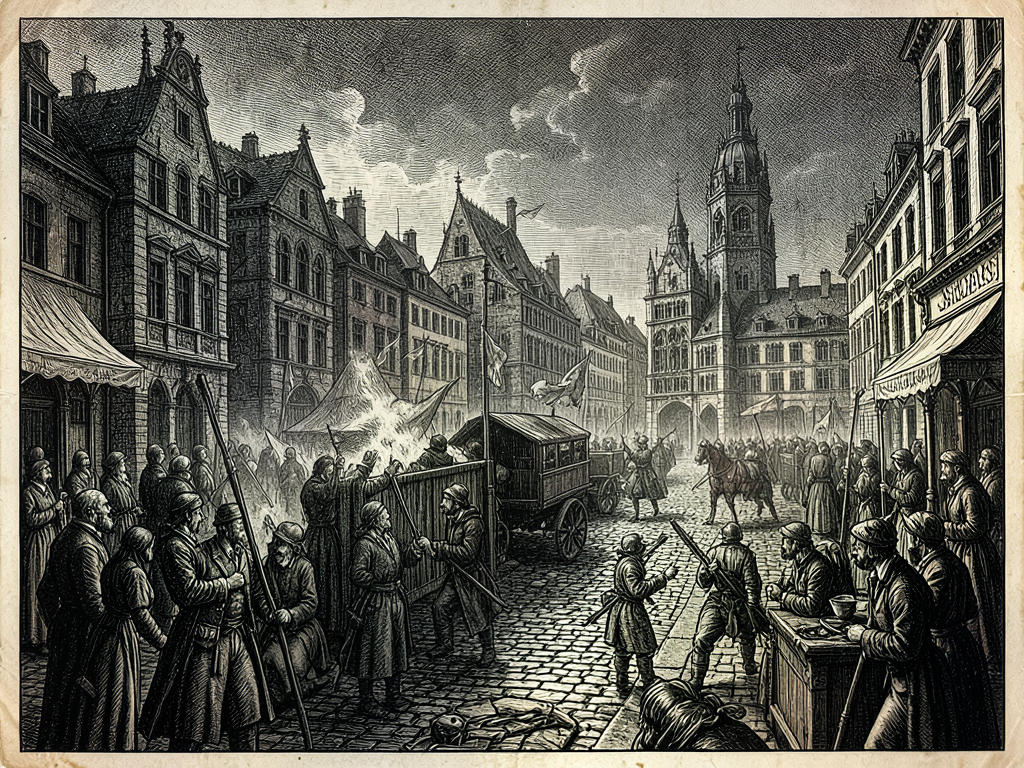
The gazettes of this third day of October, in the year of our Lord eighteen hundred and forty-one, lie before me like so many tombstones in a paper graveyard. From the official chancery edicts of Vienna, stamped with the double eagle, to the humbler trade bulletins of Pest and the crownlands, a single truth emerges: the Empire is a vast machine of commerce, and its gears are grinding. The price of copper, that blood of industry, has risen by two kreuzer per pound in the Viennese exchange, while the timber auctions along the Danube report a glut, driving prices down by a full florin per fathom. Such fluctuations are the pulse of the realm, and I, your humble auditor, have spent the better part of the morning polishing a silver thaler until my reflection stared back, pale and troubled, from its face.
In Pest, the grain markets tell a tale of anxious abundance. The harvest has been generous, yet the bakers' guilds complain of hoarding, and the price of rye has crept upward despite the full granaries. A chancery decree from Vienna, published in the official gazette, imposes new tariffs on foreign grain, a measure designed to shield the Hungarian plain from competition, but one that will surely inflame the cost of bread in the coming winter. The merchants of the Upper Ward whisper that certain magnates have already begun to corner the market, their cellars fat with wheat while the poor man's loaf grows thin.
Silver, that cold and constant mistress, remains the anchor of all speculation. The imperial mint in Kremnitz reports a steady output, yet the exchange rate against the paper florin has slipped a fraction, a tremor that sends ripples through every counting-house from Pressburg to Lemberg. I have seen men weep over such fractions, their fortunes dissolved like frost in the morning sun. The gazettes note a curious rise in the price of quicksilver, used in the amalgamation of gold and silver ores, suggesting that the mines of Transylvania are being worked with renewed desperation.
As the lamps are lit along the Exchange Arcade, I set down my polishing cloth and record these figures with a heavy hand. The Empire breathes through its ledgers, and today the breath is shallow. Let the reader take heed: the price of a loaf, the weight of a coin, the creak of a timber cart—these are the true chronicles of our age, written not in ink but in the sweat of the laborer and the greed of the merchant. May God grant us a steady market and a quiet night.